GUIDES
Can You Book a Roundtrip and Skip the Return?
Last update on September 17, 2026
Content
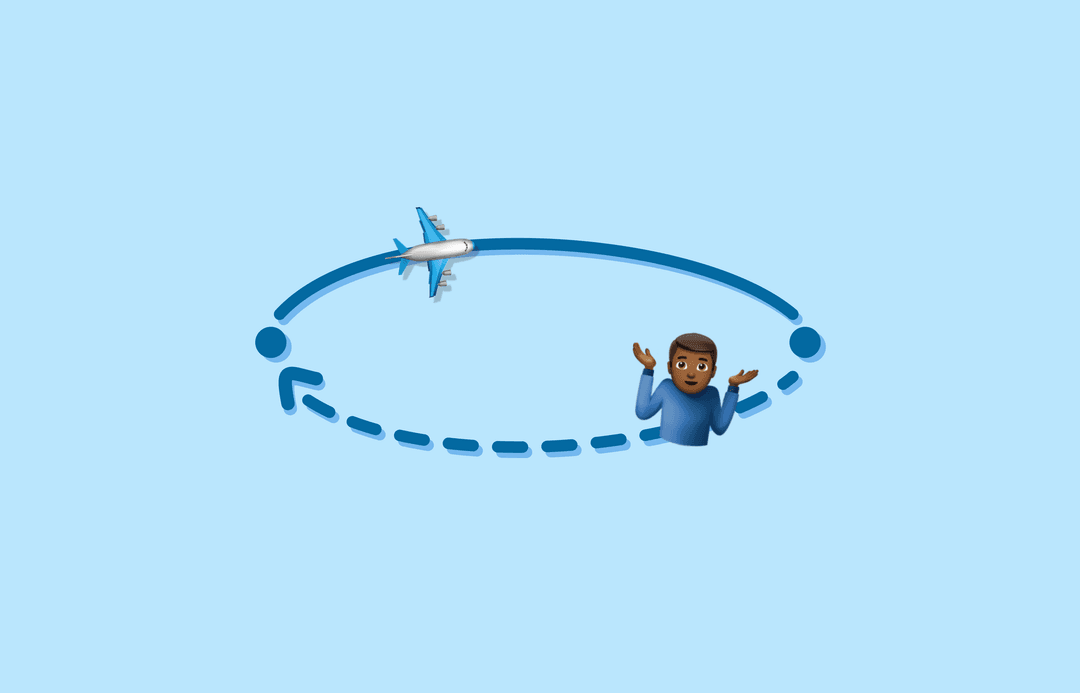
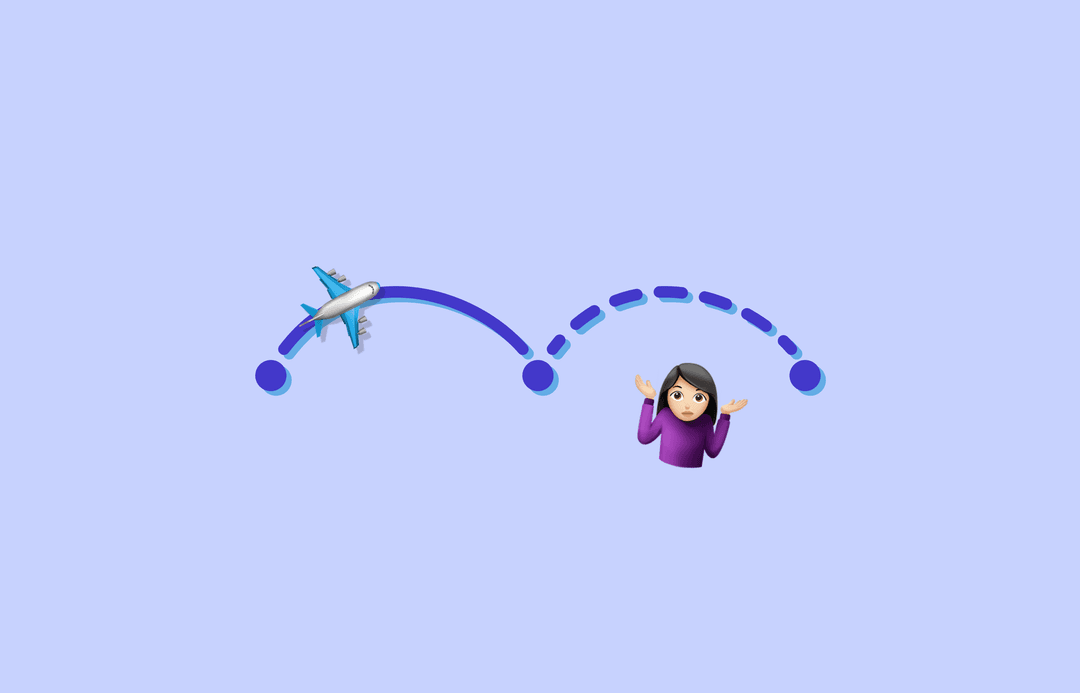
Skipping the return means flying the outbound of a roundtrip ticket and not taking the return, usually because the roundtrip was cheaper than the one-way. It’s a case of throwaway ticketing, where the cheaper fare comes with a flight you don’t need: a spare return that you may or may not end up using.
What happens if you skip a return flight?
Nothing happens at the airport. You simply don’t check in. The airline marks you as a no-show, cancels the remaining segment, and keeps the fare. There is generally no refund for the part you didn’t fly.
This works in one direction only. Airlines require the coupons of a ticket to be flown in order, so dropping the return is routine, but dropping the outbound voids everything that comes after it, including the return you wanted to keep.
Checked luggage is not a concern here either. Your bag travels to the airport you are actually flying to, unlike hidden-city ticketing, or skiplagging, where you leave the aircraft at a connecting airport and your bag continues without you.
Why a one-way can cost more than a roundtrip?
Because the cheapest fares are sold as roundtrips with conditions attached, and a one-way has no equivalent. The discount is based on how long you stay before flying back. A one-way has no length of stay, so it gets none of it, and a roundtrip with a distant return can end up cheaper.
The result is a fare table where adding a flight you never intend to take lowers the price. Say you are flying from London to New York, one-way:
| Tickets | Journeys | Segments | Date | Flown |
|---|---|---|---|---|
| $700 | London → New York | LHR → JFK | Oct 12, 2026 | ✔️ |
Booked instead as a roundtrip with a return several weeks later, the same outbound flight, in the same cabin, can come out lower:
| Tickets | Journeys | Segments | Date | Flown |
|---|---|---|---|---|
| $420 | London → New York | LHR → JFK | Oct 12, 2026 | ✔️ |
| New York → London | JFK → LHR | Nov 23, 2026 |
You fly the same seat on the same aircraft and pay $280 less. The return flight sits on the ticket, and you decide later whether it is of any use to you. This is most common on full-service airlines and on long-haul routes out of Europe and Asia. Low-cost carriers, and most US domestic routes, price each direction independently, so there is rarely anything to drop.
Can I get a refund for an unused return?
That depends entirely on the fare you bought. Restricted and basic fares generally forfeit the value of the unused portion, which is the usual outcome. More flexible fares can often be cancelled for a refund or a credit toward a future booking, sometimes minus a fee.
If the fare allows it, cancelling is tidier than simply not appearing: you may recover some value, and no no-show is recorded against the booking.
Can I get in trouble for throwaway ticketing?
Very unlikely, and the reason is structural rather than a matter of goodwill. On a spare return you fly every segment of a journey or none of it: you never step off a journey partway through, and your bag never goes anywhere you aren’t. You just don’t check in, and the airline records a no-show, which happens on every flight that departs.
Some airlines discourage the practice somewhere in their terms, which is worth being aware of rather than surprised by. In practice, spare return ticketing has no record of being frowned upon, and unlike hidden-city ticketing, where airlines have occasionally taken action against travelers who do it very frequently, there is no established pattern of anything happening at all.
How can I find these flights?
Airglitch checks this for you. Search your one-way as you normally would, and when a roundtrip prices below it, the cheaper option appears in the results with instructions for booking it directly with the airline.
You can also check by hand on the flight search engine of your choice: price the one-way, then price roundtrips with the return set several weeks or months out, and compare. Returns far from the outbound date tend to work best, since the cheaper fares generally assume a longer trip.
If you would rather not waste the return at all, two neighboring strategies are worth a look. Picking a return date you might genuinely use turns the spare return into a trip you take later. And a spare multicity ticket adds an extra destination rather than a return, which is often the cheaper option when a simple roundtrip doesn’t beat the one-way.
Which routes does it work best on?
It works best on long-haul routes out of Europe and Asia, and on transatlantic flights, for example:
- London to New York - typical savings of 40-65%
- Toronto to Hong Kong - typical savings of 35-40%
- Tokyo to New York - typical savings of 25-35%
- Paris to Tokyo - typical savings of 20-35%
See our Guide to Airglitch Saving Strategies for the other strategies Airglitch covers and how each one works.
Visit airglitch.com to save on flights. Share your feedback and follow us on socials to get the latest updates.
Created on September 16, 2026